
Northern Girls Cleaning Services
What Can You Actually Clean With a Vinegar Cleaning Solution?
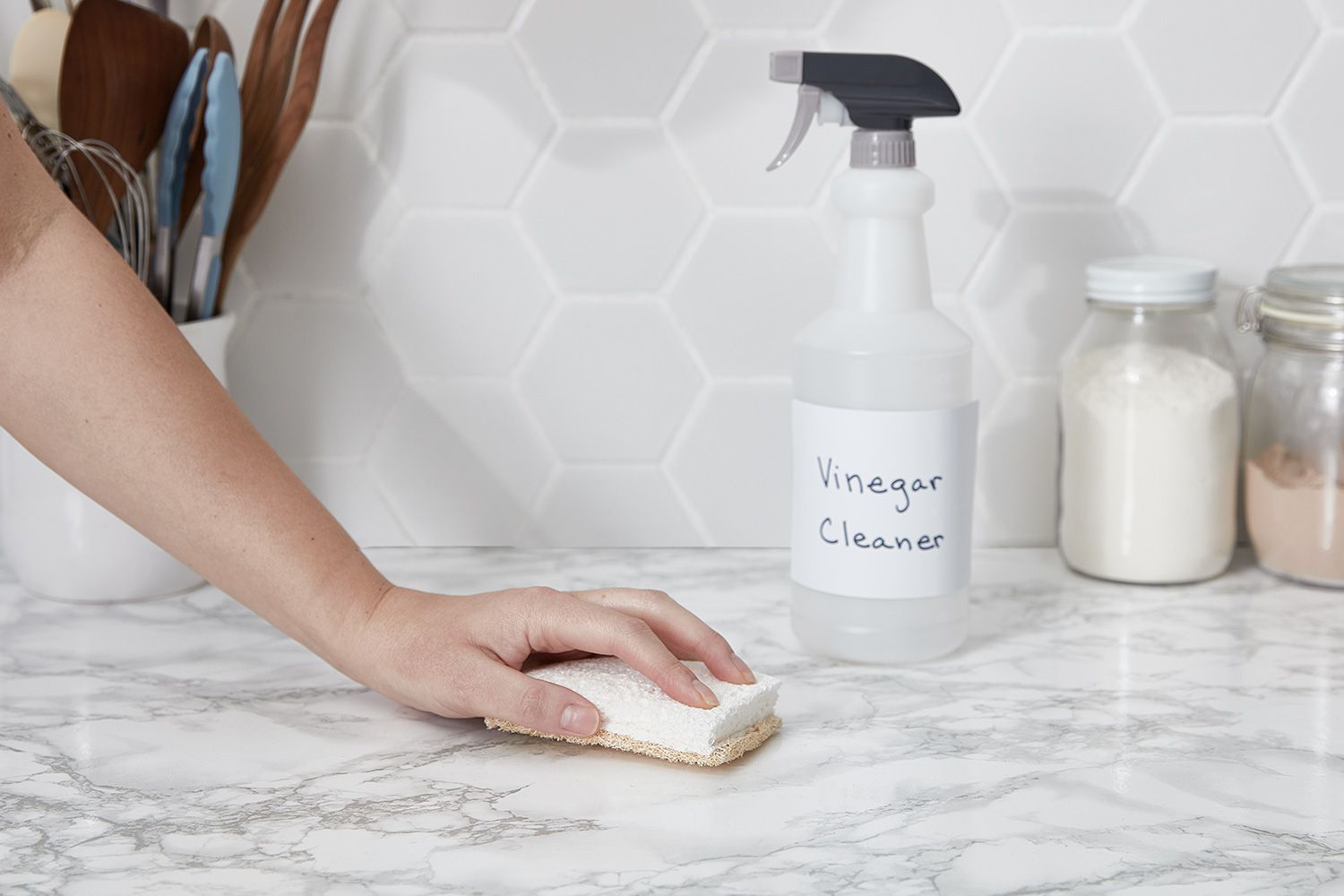
Table of Contents
- Introduction
- Is Vinegar a Disinfectant?
- Why Does Vinegar and Baking Soda Not Work?
- What Should You Never Mix With Vinegar?
- Which Surfaces Does Vinegar Damage?
- What Does Vinegar Genuinely Do Well?
- How Do You Use It on Glass and Mirrors?
- How Do You Use It in the Kitchen Safely?
- Does Vinegar Kill Mold?
- Does Vinegar Belong in Your Laundry?
- When Do You Need Something Stronger?
- Prefer to Hand the Whole Thing Off?
- Frequently Asked Questions
Key Takeaways
- Vinegar is not a disinfectant. Only EPA registered products may legally make antimicrobial claims, and vinegar is not one of them.
- Never mix vinegar with bleach or any chlorine containing product. The combination produces chlorine gas.
- Vinegar and baking soda cancel each other out. The fizz is the reaction consuming both, and what remains is mostly salty water.
- Acid etches natural stone permanently and degrades cement grout, rubber seals, aluminum, and cast iron.
- What vinegar does well is dissolve mineral deposits, cut light grease, and neutralize some odors. That is a genuinely useful list.
- Do not rely on vinegar for cutting boards or anything that touched raw meat. Those need an actual sanitizer.
- The EPA's own instruction for mold on hard surfaces is to scrub with detergent and water, dry completely, and fix the moisture source.
Introduction
A vinegar cleaning solution is excellent at dissolving mineral deposits, cutting light grease, and neutralizing some odors, and it is not a disinfectant, not a mold treatment, and not safe on every surface. Knowing which of those three categories a job falls into is the difference between a cheap effective cleaner and a damaged countertop.
That distinction matters in East Jordan, Boyne City, and the communities around Lake Charlevoix, where a good number of homes are on private wells. Hard water leaves the mineral deposits vinegar handles better than almost anything, so it earns a real place in the cupboard here.
The risk is in the overreach. Advice that vinegar disinfects a bathroom or sanitizes a cutting board is a food safety and hygiene problem, and mixing it with the wrong product in a small bathroom is a chemical hazard rather than a cleaning mistake.
For households that would rather hand off the routine entirely, recurring maintenance cleaning covers the same ground on a weekly, biweekly, or monthly schedule. For everyone else, here is where vinegar works and where it does not.
Is Vinegar a Disinfectant?
No. The EPA states that only registered antimicrobial products may make efficacy claims, and that those claims must be reviewed and approved on the label. Vinegar carries no such registration, so it cannot be relied on to disinfect anything.
This is the most common and most consequential myth about vinegar.
What the distinction means
- Cleaning removes soil, dust, and grime from a surface. Vinegar does this well.
- Sanitizing reduces microorganisms to a level considered safe.
- Disinfecting destroys or inactivates many harmful microorganisms, using an appropriate product according to its label directions.
The differences between sanitizing and disinfecting matter because each requires a product tested for that purpose, applied for a stated contact time.
Where the myth causes real problems
- Cutting boards and food prep surfaces, especially after raw meat. These need an actual sanitizer, and treating vinegar as sufficient is a foodborne illness risk.
- Bathrooms during illness in the household, where an EPA registered product used at its labeled contact time is the appropriate choice.
- Anywhere someone immunocompromised lives, where the margin for error is smaller.
The honest position
Use vinegar to clean. When the goal is killing pathogens rather than removing soil, reach for a registered product and follow its label. Those are two different jobs and one product does not do both.
Why Does Vinegar and Baking Soda Not Work?
Because they neutralize each other. Vinegar is an acid, baking soda is a base, and combining them produces carbon dioxide, water, and a small amount of salt. The fizzing is the reaction destroying both ingredients.
This is the most persistent cleaning myth in circulation, and it appears in almost every vinegar article.
What is actually happening
- You mix them and get an impressive fizz.
- The carbon dioxide escapes as gas, which is the bubbling.
- The acid and the base consume one another.
- What remains is mostly water with dissolved sodium acetate.
- You are now cleaning with salty water.
Where each one works alone
- Vinegar alone dissolves mineral deposits and cuts light grease, because the acid is intact.
- Baking soda alone provides gentle abrasion and absorbs odor, because the base is intact.
- Used in sequence with a rinse between they can both contribute. Mixed in a bowl, neither does.
The one situation where the fizz helps
Physically loosening debris in a slow drain, where the bubbling agitates buildup mechanically. That is a physical effect rather than a cleaning one, and hot water usually does as much.
What Should You Never Mix With Vinegar?
Never combine vinegar with bleach or any chlorine containing product. The reaction releases chlorine gas, which is genuinely dangerous in an enclosed space like a bathroom.
This warning is missing from most vinegar articles, and its absence is the single most serious problem with the usual advice.
The combinations to avoid
- Vinegar and bleach, or vinegar and any chlorinated cleaner. This produces chlorine gas.
- Vinegar and a toilet with a bleach tablet in the tank. A realistic scenario, since pouring vinegar into a bowl fed by chlorinated water creates the reaction without anyone intending to mix anything.
- Vinegar and hydrogen peroxide combined in one container, which forms peracetic acid, an irritant that can be corrosive at concentration.
- Vinegar and any product whose label you have not read. If a bathroom cleaner contains chlorine, vinegar does not belong near it.
The practical rules
- Rinse a surface thoroughly before switching products.
- Never store a mixture in an unlabeled bottle.
- Ventilate, particularly in a small bathroom.
- Check the toilet tank before pouring vinegar into the bowl.
- One product at a time, always.
Why this matters more in a bathroom
Bathrooms are small, often poorly ventilated, and the room where people most commonly use both vinegar and chlorine based products. That is exactly the combination of factors that turns a household mistake into a medical one.
Which Surfaces Does Vinegar Damage?
Anything made of or bound with calcium carbonate, anything metal that corrodes, and anything sealed with a finish acid can strip. On several of these the damage is permanent.
Keep vinegar away from
- Natural stone. Granite, marble, travertine, and limestone etch on contact, leaving permanent dull spots. This is the most common expensive mistake.
- Cement based grout. Repeated acid exposure erodes it and shortens its life, which is why acid is the wrong choice for routine grout cleaning.
- Cast iron. Strips seasoning and promotes rust.
- Aluminum, including pans, window frames, and some appliance trim, which corrodes and discolors.
- Rubber seals and gaskets, which is why running vinegar through washing machines and dishwashers is questionable despite being widely recommended.
- Waxed, oiled, or unsealed wood, where acid dulls or strips the finish.
- Electronics and screens, which have their own coatings.
- Coated shower glass. Many panels ship with a factory water repellent coating, and acid strips it permanently. Thedifference between coated and uncoated shower glass determines whether vinegar helps or does damage.
The test that prevents most of it
Try any solution on a hidden area first and wait. Etching on stone is not always immediate, and a spot behind a toilet or under an overhang tells you before the middle of a countertop does.
What Does Vinegar Genuinely Do Well?
It dissolves mineral deposits, cuts light grease, and neutralizes some odors. That is a shorter list than most articles claim and it covers a lot of real household work.
Where it is genuinely the right tool
- Hard water and limescale. Kettles, shower heads, faucet aerators, and glass shower doors that are uncoated. Acid dissolving mineral deposit is exactly what the chemistry does.
- Glass and mirrors, where it evaporates cleanly without leaving film.
- Light kitchen grease on sealed countertops and appliance exteriors.
- Odor neutralizing in a room, a fridge, or a garbage bin, where it changes the smell rather than masking it.
- Coffee makers and kettles, following the manufacturer's descaling instructions.
- Sticky residue from labels and tape.
Why hard water makes it more useful here
Homes drawing from private wells in this area often have hard water, and hardness varies well to well. Mineral deposit is the problem vinegar handles better than almost any general purpose cleaner, so it earns its place in a way it might not somewhere with soft municipal water.
What to skip
Skip the cornstarch, which leaves residue. Skip the newspaper, which is a holdover from a different era of printing and leaves lint. A folded microfiber cloth outperforms both.
How Do You Use It on Glass and Mirrors?
Equal parts vinegar and warm water in a spray bottle, applied to a folded microfiber cloth or sprayed and wiped promptly, working out of direct sunlight.
The method
- Mix equal parts distilled white vinegar and warm water.
- Check for a coating first on shower glass, since acid strips factory water repellent treatments.
- Work out of direct sun. Warm glass dries the solution before you can wipe it, which is the main cause of streaks.
- Spray and let it sit briefly on spotted glass so deposits dissolve rather than smear.
- Wipe with a folded microfiber cloth, using a fresh face as each one loads up.
- Finish with a dry cloth or a squeegee for larger panels.
Two things that ruin the result
Fabric softener in the microfiber wash, which coats the fibers and destroys absorbency, and too much solution, which leaves a film as it dries unevenly.
Where not to use it
Coated shower glass, tinted or filmed windows, and screens. Also avoid letting it run down onto stone sills or wooden frames below the glass, which is a common way stone gets etched by accident.
How Do You Use It in the Kitchen Safely?
Use it for mineral deposits, light grease, and odor on sealed surfaces. Do not use it as a substitute for sanitizing anything that touched raw meat, and keep it off stone counters.
Reasonable kitchen uses
- Descaling the kettle or coffee maker, following the appliance instructions.
- Faucet aerators and shower heads, soaked to dissolve buildup.
- Sealed laminate or solid surface counters, for light grease and general wiping.
- Refrigerator interiors, where the odor neutralizing helps and there is no stone involved.
- Microwave steaming. A bowl of vinegar and water heated briefly loosens splatter so it wipes away.
- Garbage bin interiors after washing.
Where to stop
- Cutting boards, particularly after raw meat, poultry, or fish. Wash with hot soapy water and use an actual sanitizer.
- Stone counters of any kind.
- Cast iron and aluminum cookware.
- Heavy baked on grease, which needs a degreaser rather than an acid.
The food safety line
Vinegar cleans a food surface. It does not sanitize one. The EPA's registration requirement exists precisely so that a product claiming to kill pathogens has been tested doing it, and vinegar has not been.
Does Vinegar Kill Mold?
No, and the EPA's own instruction is simpler than the vinegar advice. Scrub mold off hard surfaces with detergent and water, dry completely, and fix the moisture problem that caused it.
What the EPA actually says
The guidance is to "scrub mold off hard surfaces with detergent and water, and dry completely," alongside fixing plumbing leaks and other water problems as soon as possible. Notably, it does not recommend biocides as routine practice, and it does not recommend vinegar.
Why the moisture point is the whole answer
Mold grows where there is moisture. Removing the visible growth without addressing why the surface was wet guarantees it returns, which is why people conclude their treatment failed when the treatment was never the issue.
Practical handling
- Ventilate while working, and run the bathroom fan during and after showers.
- Scrub with detergent and water, then dry the surface thoroughly.
- Find the water. A dripping fixture, a failed seal, condensation on a cold surface, or a fan that vents into the attic rather than outdoors.
- Do not disturb a large area without proper containment, since scrubbing disperses spores.
- Porous materials that stay moldy generally need replacing rather than cleaning.
A structured approach to bathroom cleaning order and method helps here, since bathrooms are where most household mold appears and where ventilation habits decide whether it returns.
Does Vinegar Belong in Your Laundry?
It can help with odor and it does not whiten anything. Check your machine's manual before making it routine, because acid degrades rubber seals and hoses over time.
What it does
- Reduces some odors, particularly mildew and smoke, when used as a pre soak.
- Helps with detergent residue on towels that have gone stiff or lost absorbency.
- Reduces static modestly in place of fabric softener.
What it does not do
- It does not bleach or whiten. Any advice presenting it as a bleach alternative for whites is wrong.
- It does not disinfect laundry.
- It does not soften fabric in the way a softener does. It works partly by removing residue that made fabric feel stiff.
The cautions
- Check the manual. Several manufacturers advise against vinegar because of seal and hose degradation.
- Never combine with bleach in the same cycle or the same compartment.
- Avoid on silk, wool, and other protein fibers, which acid can damage.
- Use sparingly rather than every load if you use it at all.
On adding essential oils
Widely suggested and worth care. The AVMA advises consulting your veterinarian before using products containing essential oils around pets, since they can harm animals, particularly in concentrated form. A scented household spray in a home with a cat is worth a conversation first.
When Do You Need Something Stronger?
when the job is killing pathogens, removing heavy grease, treating mold, or restoring a surface that acid cannot touch. Reaching for vinegar in those situations wastes effort and sometimes causes damage.
Situations that call for a different product
- Disinfecting during illness, which needs an EPA registered product used at its labeled contact time.
- Food contact surfaces after raw meat, which need an actual sanitizer.
- Heavy or baked on grease, which needs an alkaline degreaser, since grease responds to base rather than acid.
- Soap scum on coated glass, which needs a pH neutral product.
- Stone counters and floors, which need a stone safe cleaner.
- Etched glass or stone, which is damage rather than dirt and cannot be cleaned at all.
Situations that call for a person
Layered buildup nobody has touched in a year, grout that has stopped responding, or a bathroom where the ventilation question needs answering as much as the cleaning does. Those are worth a professional reset rather than a stronger bottle.
The reasonable conclusion
Vinegar deserves a spot in the cupboard and not the whole cupboard. A mild abrasive, an alkaline degreaser, a registered disinfectant, and a stone safe cleaner cover what it cannot, and together that is a complete set for far less than a shelf of specialty sprays.
Using Vinegar Where It Actually Works
The useful summary is short. Vinegar dissolves mineral deposits, cuts light grease, and neutralizes odor. In a region where many homes are on hard well water, that first item alone earns it a permanent place under the sink.
What it does not do is disinfect, sanitize, whiten, or kill mold. The EPA requires products making antimicrobial claims to be registered and tested, and for mold its own instruction is detergent, water, thorough drying, and fixing the moisture source. Treating vinegar as a germ killer is where household advice crosses into a genuine hygiene problem.
Two rules keep it safe. Never mix it with bleach or any chlorine containing product, because chlorine gas in a small bathroom is a hospital visit rather than a cleaning error. And stop pairing it with baking soda, since the fizz you see is the two of them cancelling out into salty water.
Then respect the surfaces. Stone etches permanently, grout erodes, rubber seals degrade, and coated shower glass loses the coating for good. Test anywhere you are unsure, wait, and look before committing to a whole countertop.
Prefer to Hand the Whole Thing Off?
If the buildup has outgrown what any spray bottle will fix, or you would rather not manage which product belongs on which surface, a thorough clean sorts the backlog and a regular schedule keeps it there.
Homes in East Jordan, Boyne City, Charlevoix, Boyne Falls, Walloon Lake, and the surrounding Northern Michigan communities can
contact Northern Girls Cleaning for a quote on a one time deep clean or a recurring weekly, biweekly, or monthly schedule.
Frequently Asked Questions (FAQs)
Does vinegar disinfect or just clean?
It cleans. The EPA requires products to be registered and tested before making antimicrobial claims, and vinegar is not registered. Use it to remove soil, and use a registered disinfectant when the goal is killing pathogens.
Why should you not mix vinegar and baking soda?
They neutralize each other. Acid plus base produces carbon dioxide, water, and a little salt, so the fizz is the reaction consuming both ingredients. Use them separately with a rinse between, not mixed in a bowl.
What should you never clean with vinegar?
Natural stone, cement grout, cast iron, aluminum, rubber seals, waxed or unsealed wood, screens, and coated shower glass. Stone etching and coating loss are permanent, so test a hidden spot first.
Can you mix vinegar and bleach?
Never. The combination releases chlorine gas, which is dangerous in an enclosed space. Rinse surfaces thoroughly before switching products, and check for bleach tablets before pouring vinegar into a toilet.
Does vinegar kill mold?
No. The EPA's guidance is to scrub mold off hard surfaces with detergent and water, dry completely, and fix the moisture problem causing it. Without addressing the water source, mold returns regardless of product.