
Northern Girls Cleaning Services
How Do You Clean a Mattress, and Can You Really Sanitize One?
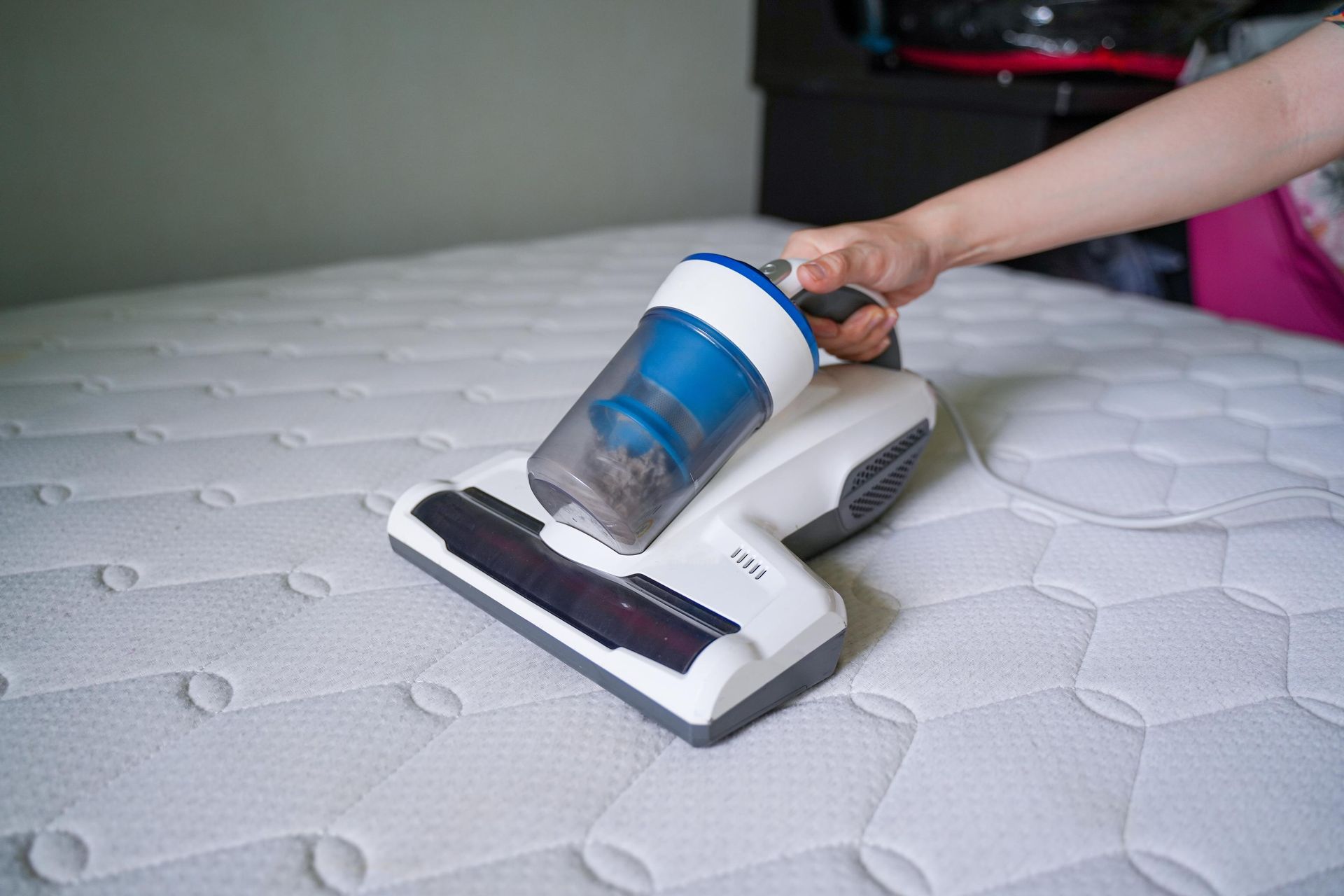
Table of Contents
- Introduction
- Can You Actually Sanitize a Mattress?
- Why Does an Encasement Beat Any Cleaning Method?
- What Are You Actually Removing From a Mattress?
- How Do You Vacuum a Mattress Properly?
- How Do You Treat a Stain Without Soaking It?
- Does Baking Soda Really Do Anything?
- Why Is Moisture the Real Danger?
- What Does Humidity Have to Do With It?
- What Should You Never Do to a Mattress?
- When Is Replacing It the Right Answer?
- Want the Bedroom Reset Properly?
- Frequently Asked Questions
Key Takeaways
- You cannot truly sanitize a mattress at home. Sanitizing requires a product held on a surface it can reach, and a mattress is porous, absorbent, and impossible to saturate safely.
- A zippered allergen proof encasement does more than any cleaning method, because dust mites live inside the mattress where no vacuum reaches.
- The EPA recommends dust proof covers on mattresses and pillows, washing bedding weekly in hot water, and keeping indoor humidity between 30 and 50 percent.
- Humidity control genuinely reduces mites, because they absorb moisture from the air and cannot survive sustained dry conditions.
- Use as little liquid as possible. A mattress core that gets wet cannot be dried, and mold inside it cannot be reached or removed.
- Baking soda absorbs surface odor and moisture modestly. It is not a cleaner and it must be vacuumed out thoroughly.
- Stains void many mattress warranties, which is worth knowing before deciding how aggressively to treat one.
Introduction
Cleaning a mattress means vacuuming the surface, spot treating stains with minimal liquid, and drying it completely, and the honest answer on sanitizing is that you cannot do it at home. Sanitizing requires a product to stay in contact with a surface it can actually reach, and a mattress is porous and absorbent throughout its depth, so anything strong enough to sanitize the inside would also soak it.
That matters because the thing people are usually trying to solve, dust mites and the allergens they leave behind, lives inside the mattress rather than on it. No vacuum reaches it. Sealing it in works, and cleaning the surface does not.
There is a local wrinkle too. Homes around East Jordan and Lake Charlevoix stay sealed from November through March, and a bedroom running a humidifier through that stretch can create exactly the conditions mites prefer. Seasonal cottages sitting unheated have the opposite problem, which is a mattress absorbing damp all winter.
Routine bedroom upkeep does more here than an occasional mattress project, which is whyrecurring maintenance cleaning and weekly laundering outperform a once a year effort.
Can You Actually Sanitize a Mattress?
No, not in the way the word implies. Sanitizing means achieving a measured reduction in microorganisms using a registered product at its labeled dilution and contact time, on a surface the product can reach. A mattress fails that test on every count.
Why the physics do not work
- It is porous. Fabric, foam, and fill absorb rather than hold liquid on the surface.
- Contact time is impossible. A product needs to stay wet on a surface for a stated period. On a mattress it soaks in and disappears from the surface almost immediately.
- Depth defeats it. Whatever you apply reaches a few millimetres. The biological material is distributed through the fill.
- Saturation creates a worse problem. Applying enough liquid to reach the interior guarantees moisture you cannot dry out.
What vinegar misting does not do
Light misting with vinegar and water is a common recommendation and it does not sanitize anything. Vinegar at household dilution is not a registered disinfectant, it will not achieve any meaningful reduction in microbes, and on a mattress it mostly adds moisture and a smell that fades.
What you can honestly achieve
Reduced surface allergen load, reduced odor, removal of loose skin cells and dust that feed mites, and a drier interior that discourages them. Those are real and worth doing. They are not sanitizing, and any service or product promising a sanitized mattress is overstating what is possible.
Why Does an Encasement Beat Any Cleaning Method?
Because dust mites and their allergen live inside the mattress, not on the surface. You cannot vacuum them out, so the effective approach is to seal them in and cut off the food supply.
This single change outperforms every cleaning technique in this article combined.
What the EPA recommends
- Use dust proof covers on pillows and mattresses.
- Wash bedding in hot water once a week, and dry completely.
- Maintain low indoor humidity, ideally between 30 and 50 percent relative humidity.
What to look for in an encasement
- Fully zippered on all six sides, not a fitted sheet style pad. A pad that only covers the top does not seal anything.
- A pore size rated to block allergen, described as allergen proof or mite proof rather than simply waterproof.
- Breathable fabric, since a plastic feeling cover traps heat and moisture against the mattress.
- The same treatment for pillows, which hold more allergen per volume than the mattress does.
Why it works when cleaning does not
Mites feed on shed skin that falls through the sheets. An encasement stops new skin reaching them and stops existing allergen coming back out. Nothing has to be killed, and nothing has to be extracted. Broader tactics for reducing dust throughout the bedroom work alongside it.
What Are You Actually Removing From a Mattress?
Shed skin, body oils, sweat residue, dust, and mite waste. Understanding which of those you are targeting determines whether a technique is worth the effort.
The four categories
- Surface dust and skin cells. Vacuuming genuinely removes these, and they are what mites feed on.
- Absorbed sweat and oils. These have soaked into the fill and cannot be extracted at home. A washable protector is what prevents them.
- Stains. Surface treatable when fresh, largely permanent once set, and mostly cosmetic.
- Mite allergen. Distributed through the fill. Not removable, only containable.
Why this ordering matters
Most advice on how to clean a mattress leads with stains, which are the least consequential category, and says least about protectors and encasements, which address the two categories you can genuinely control.
The one honest exception
A fresh spill treated immediately is worth real effort, because liquid that reaches the core is the beginning of a mold problem rather than a stain problem. Speed matters more there than technique.
How Do You Vacuum a Mattress Properly?
Use an upholstery attachment on a vacuum with sealed filtration, work in overlapping sections slowly, and pay most attention to seams and piping where debris collects.
The method
- Strip the bed completely and start the bedding washing while you work.
- Check the attachment is clean, since a dirty upholstery head deposits more than it lifts.
- Work in sections, overlapping each pass. Slow passes lift considerably more than fast ones.
- Do the seams and piping carefully with a crevice tool. That is where skin cells and dust concentrate.
- Cover the sides and the base, not only the sleeping surface.
- Flip or rotate according to the manufacturer's instructions and repeat.
Why filtration matters more than suction
A vacuum without sealed filtration collects the large debris and exhausts fine particles, including allergen, straight back into the bedroom air. That is the opposite of the goal. A sealed machine keeps what it collects.
Honest expectations
Vacuuming removes the food supply and the loose surface material. It does not remove mites living in the fill and it does not remove allergen that has worked its way in. Do it because it helps, not because it solves the problem.
How Do You Treat a Stain Without Soaking It?
Blot rather than rub, use the least liquid that will work, and match the treatment to the stain type. Cold water for anything protein based, since heat sets it permanently.
By stain type
- Sweat, blood, and other protein stains. Cold water and a mild detergent, applied to the cloth rather than the mattress. Never warm or hot water, which sets the protein.
- Urine. An enzyme cleaner, because uric acid crystals are not water soluble and will keep releasing odor in humidity. Apply the minimum that will reach the stain.
- Beverages and food. A little mild detergent solution, blotted.
- Old set stains. Largely permanent. Treating them aggressively risks the mattress more than the stain risks you.
The technique that prevents damage
- Apply cleaner to a cloth, not directly to the mattress. This alone prevents most oversaturation.
- Blot from the outside inward so the stain does not spread.
- Press rather than scrub. Scrubbing pushes material into the fill and damages the surface fabric.
- Follow with a clean damp cloth to lift residue, then a dry cloth to pull moisture back out.
- Stand on a towel over the spot to draw moisture upward.
On hydrogen peroxide
It is effective on blood and it lightens fabric. Test on a hidden area first, expect some bleaching, and use it only when the alternative is a stain you would replace the mattress over anyway.
Does Baking Soda Really Do Anything?
Modestly. It absorbs some surface odor and moisture. It is not a cleaner, it does not kill anything, and it has to be vacuumed out thoroughly or it stays in the fabric.
What it is actually good for
- Lifting light odor from a mattress that is otherwise clean.
- Drawing residual moisture out of a spot you have just treated.
- Freshening a mattress that has been in storage or unused.
How to use it without creating a new problem
- Sift it on evenly rather than dumping it in piles.
- Leave it several hours. Longer is marginally better, and a full day is the practical maximum before it becomes a nuisance.
- Vacuum thoroughly, going over the surface several times from different directions.
- Check the seams, where powder collects and stays.
What it will not fix
Deep odor from urine or sweat that has soaked into the fill. That odor originates below where baking soda can reach, and the powder simply sits on top of it. If a smell returns within days, the source is internal and no surface treatment will resolve it.
Why Is Moisture the Real Danger?
Because a mattress core that gets wet cannot be dried out, and mold growing inside it cannot be reached, cleaned, or removed. Every technique in this article is constrained by that fact.
What happens when a mattress gets too wet
- Liquid moves past the surface fabric into foam or fill.
- Air cannot circulate through the interior, so evaporation is extremely slow.
- The interior stays damp for days or weeks.
- Mold and bacteria develop in a location nothing can reach.
- The smell that follows is permanent, and the mattress is finished.
The rules that follow
- Apply cleaner to the cloth, never pour or spray directly onto the mattress.
- Use the least liquid that works, and accept a slightly imperfect stain over a soaked core.
- Never steam clean a mattress at home. Steam introduces moisture into exactly the place it should not go.
- Dry completely before making the bed. Fans, open windows, and several hours minimum.
- Stand the mattress on edge while drying so air reaches both faces.
- Never put a protector or sheets on a mattress that is still damp, which traps the moisture in.
The bigger point
Most mattress damage caused by cleaning is moisture damage rather than chemical damage. Effective mattress cleaning is mostly restraint.
What Does Humidity Have to Do With It?
Dust mites absorb moisture from the air and cannot survive sustained dry conditions, so keeping indoor humidity in the EPA's recommended 30 to 50 percent range does more to reduce them than cleaning does.
Why this is the underrated lever
Mites do not drink. They take water directly from the surrounding air, which means humidity is not a comfort setting for them but a survival requirement. A bedroom held in the recommended range is genuinely hostile to them, and one held above it is genuinely hospitable.
The local complication
- Winter, November through March. The house stays sealed and a bedroom humidifier can easily push levels above the range. Anyone running one for dry air should check the reading rather than guessing.
- Summer. Lake humidity means the opposite problem, and a bedroom can sit well above 50 percent without anyone adding moisture.
- Seasonal and unheated properties. A mattress in a cottage that sits cold all winter absorbs ambient damp. Airing it thoroughly on opening matters more than cleaning it.
- Basement bedrooms, which run humid year round in most homes.
What to do about it
A hygrometer costs very little. Check the bedroom, not the living room, and check it in the season you suspect. Then adjust with ventilation, a dehumidifier, or by dialing back a humidifier that was set on assumption rather than measurement.
What Should You Never Do to a Mattress?
Never soak it, never steam it, never machine wash a cover that is not designed to come off, and never treat a memory foam mattress the way you would treat an innerspring.
The list
- Soaking or spraying directly. Covered above and worth repeating, since it is the most common irreversible mistake.
- Steam cleaning. Introduces moisture into a core that cannot dry.
- Bleach. It damages fibers, may not be safe against the materials, and does nothing useful here.
- Aggressive scrubbing. Pushes material inward and abrades the surface fabric.
- Removing a non removable cover, which often cannot be refitted and may void the warranty.
- Putting a memory foam mattress in direct sun for extended periods, since heat degrades the foam.
- Ignoring the care label. Specialty materials, latex, and hybrid constructions have specific requirements.
The warranty point nobody mentions
Many mattress warranties are voided by staining. That is worth knowing before you decide how much to invest in treating an existing stain, and it is a strong argument for a waterproof protector from day one rather than after the first accident.
On sunlight
Airing a mattress in dry air helps by lowering internal moisture, which discourages mites. Direct sunlight does not penetrate far enough to matter biologically, and prolonged heat is bad for foam. Air it, do not bake it.
When Is Replacing It the Right Answer?
When liquid has reached the core, when there is a persistent smell that returns after treatment, or when the mattress no longer supports you. None of those are cleaning problems.
Signs cleaning will not help
- A musty or sour smell that comes back within days of a thorough surface treatment.
- Visible mold, or dark patches spreading beneath the surface fabric.
- A large saturation event, such as a burst hot water bottle or a major accident.
- Sagging, body impressions, or wire you can feel.
- Waking with symptoms that resolve when sleeping elsewhere, after an encasement has been tried.
The realistic middle ground
If the mattress is structurally fine and the issue is allergen rather than damage, an encasement plus weekly hot water laundering plus humidity control is worth trying before replacing anything. That combination addresses the actual mechanism and costs a fraction of a new mattress.
Where professional help fits
A house cleaning service cleans the bedroom, handles the floors and soft surfaces, and can change linens as an add on. A top to bottom deluxe cleaning resets the room, which matters because the room reloads the bed. Deep extraction of a mattress itself is specialist equipment and a different trade, and it carries the same moisture risk described above.
A Realistic Mattress Routine
The honest version of mattress care is short. Put a zippered allergen proof encasement on the mattress and the pillows, because that addresses what cleaning cannot reach. Wash bedding weekly in hot water and dry it completely, which the EPA recommends specifically for controlling mites. Keep bedroom humidity in the 30 to 50 percent range, since mites take their water from the air.
Then vacuum the mattress with sealed filtration a few times a year, working the seams carefully, and treat stains promptly with cold water and the least liquid that will do the job. Apply cleaner to the cloth rather than the mattress, blot rather than scrub, and dry it fully before the bed goes back together.
Skip the things that sound thorough and are not. Vinegar misting does not sanitize, steam cleaning risks the core, and baking soda handles light surface odor rather than anything that has soaked in.
And be clear about what is achievable. Nobody sanitizes a mattress at home. What you can do is reduce the allergen load, remove the food supply, keep the interior dry, and seal in what remains. Done consistently, that combination outperforms any amount of scrubbing, and it works best alongside reducing allergens in the soft surfaces around the bed, since curtains, rugs, and upholstery reload the bedding between washes.
Want the Bedroom Reset Properly?
If the bedroom has reached the point where floors, soft surfaces, and the corners nobody reaches all need attention at once, a thorough clean of the room does more for how you sleep than a mattress project on its own.
Homes in East Jordan, Boyne City, Charlevoix, Walloon Lake, and the surrounding Northern Michigan communities can
contact Northern Girls Cleaning for a quote on a one time deep clean or a recurring weekly, biweekly, or monthly schedule.
Frequently Asked Questions
Can you really sanitize a mattress at home?
No. Sanitizing needs a product held on a surface it can reach, and a mattress is porous throughout. You can reduce surface allergens, odor, and the skin cells mites feed on, but the interior cannot be treated.
How often should you clean a mattress?
Vacuum it two to four times a year when you rotate it, and treat spills immediately. Weekly hot water washing of bedding and a zippered encasement matter far more than how often the mattress itself is cleaned.
Does baking soda actually clean a mattress?
It absorbs light surface odor and moisture. It does not clean, disinfect, or reach anything below the surface. Sift it on, leave it several hours, then vacuum thoroughly including the seams.
How do you get urine or sweat stains out of a mattress?
Use cold water only, since heat sets protein permanently. Apply enzyme cleaner for urine and mild detergent for sweat, always to the cloth rather than the mattress, blotting from the outside inward.
Do mattress protectors help with dust mites?
Yes, more than cleaning does. The EPA recommends dust proof covers on mattresses and pillows. Choose a fully zippered allergen proof encasement rather than a fitted pad, which only covers the top and seals nothing.